
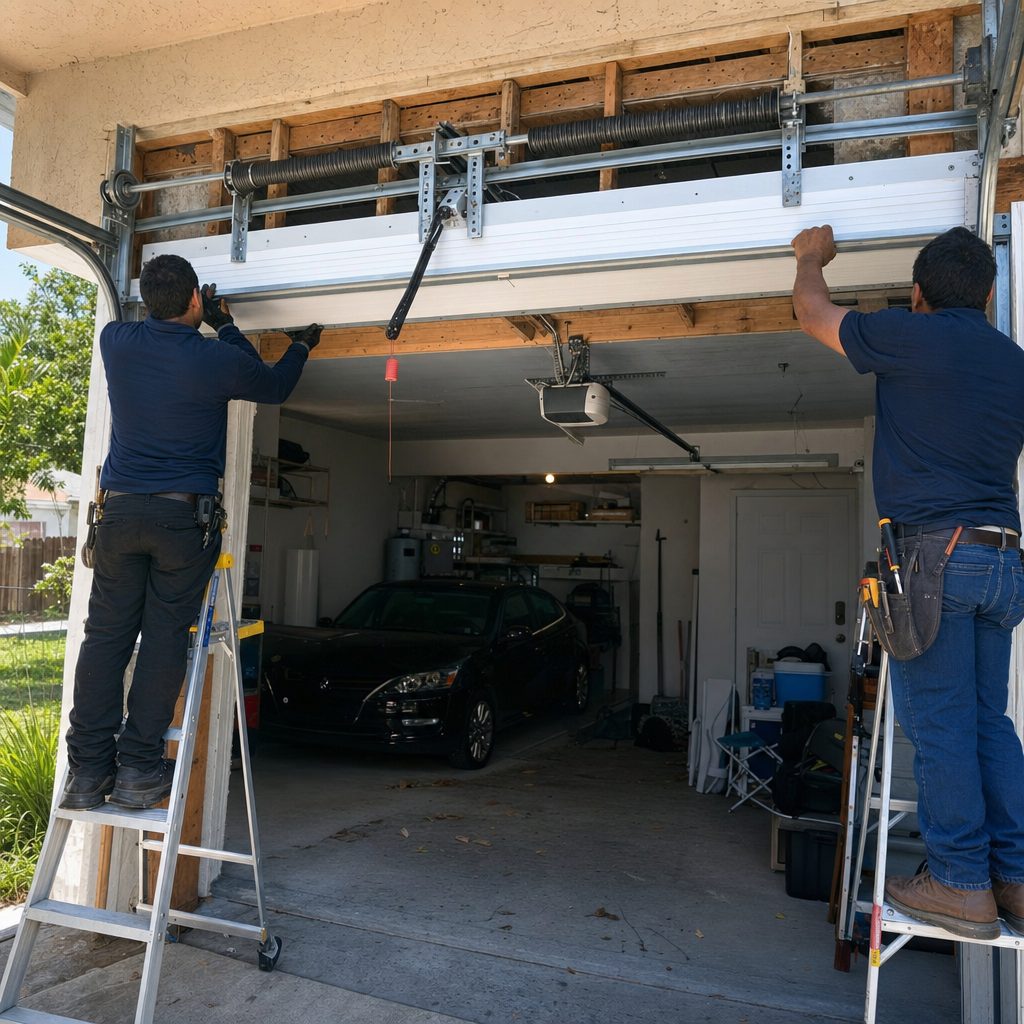
Last updated June 22, 2026
How to Hire a Garage Door Contractor in Miami: A Step-by-Step Guide
Most Miami homeowners assume hiring a garage door contractor works the same way as hiring any other home service — find someone with decent reviews, get a quote, and schedule the job. But Florida’s contractor licensing structure doesn’t work that way, and Miami-Dade County adds another layer that catches homeowners off guard. A contractor can arrive at your door with legitimate-looking credentials and still be unqualified to pull the permit your installation legally requires — leaving you, the property owner, holding the code enforcement liability. This guide walks you through the exact verification steps, the contract clauses that matter, and the Miami-specific red flags that separate accountable contractors from the ones who disappear after the check clears.
Quick Answer
To hire a garage door contractor in Miami, verify their Florida DBPR license (look for a State Certified or State Registered contractor license, or a valid specialty structure registration), confirm they hold a Miami-Dade local certification, and request a written contract with itemized parts, labor, permit responsibility, and warranty terms before any work begins. Checking those three things takes under ten minutes and eliminates the majority of bad actors operating in the Miami market.
Table of Contents
- Step 1: Understand Florida’s Contractor Licensing for Garage Door Work
- Step 2: Verify Miami-Dade County Local Certification
- Step 3: Check the License in Under Two Minutes on DBPR
- Step 4: Request and Read the Insurance Certificate Correctly
- Step 5: Read a Quote Line by Line — What the Wording Actually Signals
- Step 6: The Five Contract Clauses That Matter
- Miami-Specific Red Flags to Watch For
- Common Mistakes to Avoid
- When to Call a Professional
- Frequently Asked Questions
- The Bottom Line
Step 1: Understand Florida’s Contractor Licensing for Garage Door Work
Florida does not have a single “garage door contractor” license category. That’s the first thing most homeowners don’t know — and it’s exactly what some low-quality operators exploit. Garage door work in Florida falls under several possible license types depending on what the job actually involves:
- State Certified General Contractor (CGC): Can pull permits for essentially any structural work, including garage door installation as part of a larger project.
- State Certified Building Contractor (CBC): Similar scope; includes residential structural work and associated door systems.
- Specialty Contractor — Door and Window (or Overhead Door): A narrower license that covers garage door installation and service specifically. This is the most common credential held by dedicated garage door companies.
- Electrical Contractor: Required if the scope involves opener wiring beyond a simple plug-in connection to an existing outlet.
The practical rule: if your job involves only replacing springs, cables, rollers, or swapping out an opener that plugs into an existing outlet, a specialty structure or overhead door registration typically covers it. If you’re having a new door installed in a framed opening — especially in a newer Miami home where permit requirements apply — you need a contractor who can legally pull that permit under the correct category. Always ask upfront: “Are you licensed to pull the permit for this job if one is required?” A contractor who hedges on that answer is telling you something important.
In our 12 years working Miami, we’ve seen homeowners discover after the fact that their “licensed contractor” couldn’t actually pull the permit for the installation they paid for. The permit gets flagged, the homeowner is on the hook, and the contractor is unreachable. Verify before, not after.
Step 2: Verify Miami-Dade County Local Certification
Florida is one of the few states where a county can require an additional layer of contractor certification beyond the state license — and Miami-Dade is one of the counties that does exactly that. This trips up a significant number of out-of-area contractors who hold a valid state license but have never registered with Miami-Dade’s local licensing board.
Here’s what that means practically: a contractor holding a Florida State Certified license can work anywhere in Florida — but in Miami-Dade County, they must also hold a Certificate of Competency issued by the Miami-Dade County Building Department’s Contractor Licensing Section. Without it, they cannot legally obtain a permit for work in the county, regardless of their state credentials.
To verify Miami-Dade local certification:
- Go to the Miami-Dade County Building Department’s online contractor search (available through the county’s official website at miamidade.gov).
- Search by company name or contractor name.
- Confirm the Certificate of Competency is listed as active — not expired, suspended, or pending renewal.
- Cross-reference the business name on the certificate with the name on the quote they gave you. Mismatches are a red flag.
This step matters most for full door installations and any job that requires a permit. For minor repairs — spring replacement, cable repair, roller replacement — the permit question often doesn’t arise, but verifying the local certification still tells you whether the contractor operates above board in Miami-Dade or is cutting corners on their own credentials.
Step 3: Check the License in Under Two Minutes on DBPR
The Florida Department of Business and Professional Regulation (DBPR) maintains a free, publicly searchable database of every licensed contractor in the state. There’s no reason to take a contractor’s word for their license status when you can verify it yourself in about 90 seconds.
- Go to myfloridalicense.com and click “Verify a License.”
- Select the license type. For garage door contractors, look under “Contractor” categories — try “Building Contractor,” “General Contractor,” or search by name.
- Enter the contractor’s name or business name exactly as it appears on their quote or card.
- Review the result: confirm the license is Current, Active — not delinquent, null and void, or under investigation.
- Note the license number. A legitimate contractor should be able to recite it from memory or have it printed on their paperwork without hesitation.
What you’re looking for beyond “active”: check whether any disciplinary actions appear on the record. DBPR displays complaints and administrative actions against licensees. A single resolved complaint years ago doesn’t necessarily disqualify someone, but a pattern of complaints or a recent disciplinary action is a clear signal to keep looking.
In Miami’s high-volume market — where demand spikes after every hurricane season and following major storms that affect areas like Hialeah, Doral, and Kendall — the number of unlicensed operators attempting to collect payments before disappearing increases sharply. The DBPR check is your fastest filter.
Step 4: Request and Read the Insurance Certificate Correctly
Every legitimate garage door contractor working in Miami should carry at minimum general liability insurance and workers’ compensation coverage (or a valid workers’ comp exemption if they’re a sole operator). Requesting a Certificate of Insurance (COI) is standard practice — but simply receiving one isn’t enough. There are specific things to check.
- The certificate holder field: The COI should name you (or “homeowner at [your address]”) as the certificate holder, not a generic “to whom it may concern.” A certificate that lists only the contractor’s company name doesn’t protect you directly.
- Policy effective and expiration dates: Confirm the policy is active on the date your work is scheduled, not just the date the certificate was printed.
- The issuing agent’s phone number: A real COI includes the insurance agent’s direct contact. Call it. Verify the policy is current and active. This takes two minutes and eliminates a common fraud tactic where out-of-area contractors present certificates for cancelled policies.
- Workers’ compensation: If the contractor has employees on the job — not just themselves — they need active workers’ comp coverage. Without it, an injury on your property can create liability exposure for you as the homeowner.
Post-hurricane, Miami sees a surge of out-of-state vans — some legitimate, some not — offering fast turnaround on door repairs. A misrepresented insurance certificate is one of the most common tools used by these operators. The phone call to the issuing agent is the one step that catches it every time.
Step 5: Read a Quote Line by Line — What the Wording Actually Signals
The language on a garage door quote tells you as much about the contractor as their reviews do. Two quotes for “spring replacement” can carry dramatically different real costs depending on what’s itemized and what’s buried.
Here’s what to look for — and what it signals:
- “Hardware included” vs. “parts extra”: “Hardware included” means springs, cables, and associated hardware are covered in the quoted price. “Parts extra” means the labor quote is a placeholder and the actual cost depends on what the technician decides is needed once they’re on-site. The latter structure is where surprise charges most often appear.
- Itemized brand and model numbers: A quote that lists “LiftMaster 8500W wall-mount opener” is from a contractor who knows what they’re specifying. A quote that says “opener — belt drive” gives you no way to verify what you’re actually getting installed.
- “Permit included” vs. no mention of permits: If the job requires a permit and the quote doesn’t address it, ask directly. Some contractors exclude permit fees intentionally to keep the quote number low.
- Single lump-sum quotes: A single total with no line items is the format most commonly used by contractors who don’t want you to know which costs they’re inflating. Request an itemized breakdown — labor, parts, disposal, permit — as a condition of booking.
- Warranty language: Look for separate warranty terms for parts and labor. “Manufacturer warranty applies” for parts is reasonable; zero labor warranty is not.
When Robert Davis quotes a job at Skyline Garage Door Repair, every line item is written out before the work starts — brand, model, part cost, labor cost, and permit status. It’s how we’ve built a 4.9-star average across 1,245 reviews: no surprises on the invoice.
Step 6: The Five Contract Clauses That Matter
Most garage door jobs don’t come with a formal contract — but they should, and you can request one even for smaller repairs. At minimum, get the key terms in writing via email or text before work begins. Here are the five clauses that separate legitimate contractors from price-and-disappear operations:
- Scope of Work (specific, not vague): The contract should name the specific work being done — “replace two torsion springs on a 16×7 Clopay door” — not “garage door service.” Vague scope language is how contractors justify charging for additional work you didn’t authorize.
- Parts Specification: Brand name, model number, and whether parts are new OEM, new aftermarket, or refurbished. You have a right to know what’s going in your door.
- Total Price and Payment Terms: Full price, broken into parts and labor, with the payment schedule. Legitimate contractors don’t require full payment before work begins. A deposit is standard; full payment before the technician arrives is not.
- Permit Responsibility: Who is responsible for obtaining and paying for the permit, if one is required? This clause needs to be explicit. If the contractor is responsible and fails to pull the permit, any code enforcement issue falls on them — but only if it’s in writing.
- Warranty Terms: Separate warranty periods for parts and labor, written down. Verbal warranty promises are unenforceable. Ask for it in writing; walk away from anyone who refuses.
Miami-Specific Red Flags to Watch For
Miami’s garage door market has some dynamics that don’t apply in most other U.S. cities. Here’s what to watch for specifically:
- Out-of-state vans post-hurricane: After major weather events, contractors from Georgia, Alabama, and the Carolinas regularly drive into Miami-Dade offering fast door repairs at competitive prices. Some are legitimate; many are not licensed in Florida and carry no local certification. Check the van’s license plate against the contractor’s claimed business address — inconsistencies are worth questioning.
- No local address or only a P.O. box: Legitimate Miami contractors have a physical presence. A contractor who can’t give you a verifiable local address is harder to hold accountable if problems arise after the job.
- Pressure to skip the permit: In Miami-Dade, some contractors will suggest skipping the permit to “save time and money.” The savings are real in the short term; the liability — a failed inspection, issues at resale, potential fines — is yours to absorb later.
- Quotes delivered only verbally: In a market where demand spikes after storm season, some contractors quote low verbally to get the booking, then “discover” additional issues once they’re on-site. Get every number in writing before they touch the door.
- Mismatched business names: If the name on the van, the name on the quote, and the name on the license search don’t match, ask for an explanation. Operating under multiple business names can be a way to obscure a poor review history or a disciplinary record with DBPR.
- Refusal to provide insurance certificate: Any contractor doing work on your Miami property should produce a COI without hesitation. A contractor who stalls, says it’s “in the mail,” or offers a screenshot instead of a document issued directly by their insurer is giving you a clear signal.
Common Mistakes to Avoid
- Choosing based on price alone. The lowest quote in Miami almost always means something is being cut — licensing, insurance, parts quality, or permit compliance. A door installed incorrectly costs more to fix than it would have cost to hire right the first time.
- Not verifying the license before the technician arrives. Many homeowners plan to “check later” and never do. Run the DBPR search before you confirm the appointment — it takes 90 seconds and takes place before any money changes hands.
- Accepting a verbal scope of work. In Miami’s busy repair market, jobs get rushed and details get dropped. A verbal agreement that the contractor will “take care of everything” means different things to different people. Write it down.
- Assuming all garage door companies can work on any brand. Not every technician is familiar with the specific hardware and firmware differences between a Chamberlain, a Wayne Dalton, and a Raynor system. Ask directly which brands the contractor is certified or factory-trained on before booking.
- Ignoring the permit question for new door installations. In many Miami-area neighborhoods — particularly in areas with active HOA oversight like Doral, Pinecrest, and parts of Coral Gables — an unpermitted installation can trigger fines, mandatory corrections, and complications at the time of sale. The permit is not optional in these situations.
- Paying the full balance before the job is complete. Final payment should be made after the door operates correctly and you’ve done a walk-through with the technician. Paying in full upfront removes any leverage if something is wrong.
- Not testing the door fully before the technician leaves. Auto-reverse safety function, manual release, lock engagement, and all remotes should be tested before you sign off. Discovering an issue the next morning means a return visit — if the contractor returns at all.
When to Call a Professional
Some garage door repairs are genuinely DIY-friendly — lubricating rollers, tightening loose screws on a panel, replacing a dead battery in a remote. The rest are not. Call a professional when you’re dealing with:
- A broken torsion or extension spring — these are under significant tension and can cause serious injury if handled without the right tools and training.
- A door that has come off its tracks, especially after a vehicle impact or storm damage.
- A snapped or frayed cable — the door will be unbalanced and unstable until this is replaced.
- An opener that runs but the door doesn’t move, or moves only partway — this can indicate a stripped gear, a broken carriage, or a misaligned safety sensor that a technician needs to diagnose correctly.
- Any new installation that requires a permit in Miami-Dade County.
- Post-hurricane damage, which in Miami can range from bent panels to compromised bottom seals to track damage from wind-driven debris.
Skyline Garage Door Repair North Miami Beach offers free estimates throughout Miami — call (754) 999-9734 and Robert comes out himself to take a look. No dispatcher, no relay — you get the owner and lead technician on-site from the first visit.
Frequently Asked Questions
Do garage door contractors in Miami need a permit to replace a door?
In Miami-Dade County, a permit is typically required for new garage door installations and for replacing a door where structural changes are involved — not usually for like-for-like spring or cable repairs. The specific threshold depends on the scope of work and whether the replacement meets current Miami-Dade wind-load code requirements (which are among the strictest in the country due to hurricane exposure). Ask your contractor directly, and verify their answer against the Miami-Dade Building Department’s current requirements. If a permit is needed and your contractor can’t pull it, you need a different contractor. Call (754) 999-9734 if you want a straight answer on what your specific job requires.
How do I verify a garage door contractor’s license in Florida?
Go to myfloridalicense.com, click “Verify a License,” and search by the contractor’s name or business name under the Contractor category. The result will show the license type, current status, and any disciplinary history. This takes under two minutes and is free. For Miami-Dade specifically, also check the county’s contractor search at miamidade.gov to confirm local certification. Both checks together cover the full picture of whether a contractor is legally qualified to work on your property.
What’s a fair price range for garage door repair in Miami?
Garage door spring replacement in Miami typically runs $180–$340 depending on the spring type (torsion vs. extension) and whether cables are replaced at the same time. Opener replacement ranges from $250–$600+ depending on the brand and drive type — a LiftMaster or Chamberlain belt-drive unit costs more than a basic chain-drive model. Full door replacement, including installation labor, runs $900–$3,000+ for most residential applications, depending on door size, material, and brand. Any quote significantly below these ranges for Miami warrants a close look at what’s being excluded. Call (754) 999-9734 for a free itemized estimate with no obligation.
What brands of garage doors and openers do contractors in Miami typically service?
Most established Miami garage door contractors service the major residential brands: LiftMaster, Chamberlain, Genie, Clopay, Amarr, Wayne Dalton, Craftsman, and Raynor. The distinction that matters is whether the technician is factory-trained or certified on specific brands, not just generally familiar with them. Chamberlain and LiftMaster, for example, share a parent company and have overlapping parts — but their myQ smart systems require specific diagnostic knowledge. Ask any contractor you’re considering which brands they’re certified on before you book.
How do I spot a storm-chaser contractor in Miami after a hurricane?
Look for out-of-state vehicle plates, a business address that doesn’t correspond to any verifiable Miami-area location, and pressure to start work immediately before you’ve verified credentials. Run the DBPR license check and the Miami-Dade county certification check before agreeing to anything. Legitimate contractors operating in Miami long-term won’t resist either check — they’ll encourage it. Post-storm, the best defense is having a contractor’s number saved before the storm season starts, so you’re not searching under pressure when every door on the block needs attention. Garage Door Repair in Miami Beach and surrounding areas is part of our regular service territory — we’re here before hurricane season and after it.
Is it better to repair or replace a garage door in Miami?
Repair makes sense when the door’s structural integrity is sound and the issue is a discrete component — springs, cables, rollers, an opener, or a single damaged panel. Replacement becomes the more practical choice when the door has multiple failing components, sustained significant storm damage, or is an older model that doesn’t meet Miami-Dade’s current wind-load requirements. If you’re planning to sell the home within a few years, a non-compliant door can complicate the inspection process. A technician who evaluates your door honestly — not one angling for the higher-ticket sale — should be able to give you a clear repair-or-replace recommendation with specific reasoning. Call (754) 999-9734 for a free, no-pressure assessment.
The Bottom Line
Hiring a garage door contractor in Miami isn’t complicated once you know the two-step verification that most homeowners skip: the Florida DBPR license check and the Miami-Dade local certification check. Together, those two searches take about five minutes and filter out the majority of operators who can create real liability for you as the property owner. From there, a written, itemized quote and five specific contract clauses put you in control of the job before it starts. At Skyline Garage Door Repair, Robert Davis has spent 12 years working Miami jobs himself — not dispatching crews — and the 1,245 five-star reviews are the record of what that accountability produces. For a Garage Door Installation in Miami Beach or any repair across the Miami area, those same standards apply every time.
Ready to Get It Done Right?
If you’re ready to hire a garage door contractor in Miami and want someone whose credentials, reviews, and track record are already verified — call (754) 999-9734 for a free estimate. Robert Davis answers the call, comes out himself, and quotes the job in writing before any work begins. Whether you need a spring replaced today or a full door installation scheduled for next week, you can also explore our Garage Door Opener in Miami Beach service page for opener-specific options and pricing. No pressure, no surprises — just 12 years of straight answers and work that holds up.
Written by Robert Davis, Owner & Lead Technician at Skyline Garage Door Repair North Miami Beach, serving Miami since 2014.